Welcome to BeiBeiKang Develop Co.,Ltd
Skilled workers in mold-making, stamping and automation all know that the tiny nitrogen gas spring is the "steady pressure core" of the entire mold system.
Even seemingly insignificant accessories, if they malfunction, can directly cause uneven material pressing, product burrs, mold scratches, and frequent machine shutdowns and rework.
The majority of factories adopt a simplistic and crude approach: if something breaks, just replace it; if there's a leak, just discard it.
This may seem convenient, but in fact, it leads to continuous wear and tear every month and huge financial losses every year! Many nitrogen gas springs have not reached their service life; they are merely used improperly, installed incorrectly, or maintained wrongly.
Today, we will discuss 6 major frequent faults of the nitrogen springs for molds/robots. We will guide you step by step on how to quickly identify the problems and solve them effectively. This way, we can reduce damages at their root and lower maintenance costs!
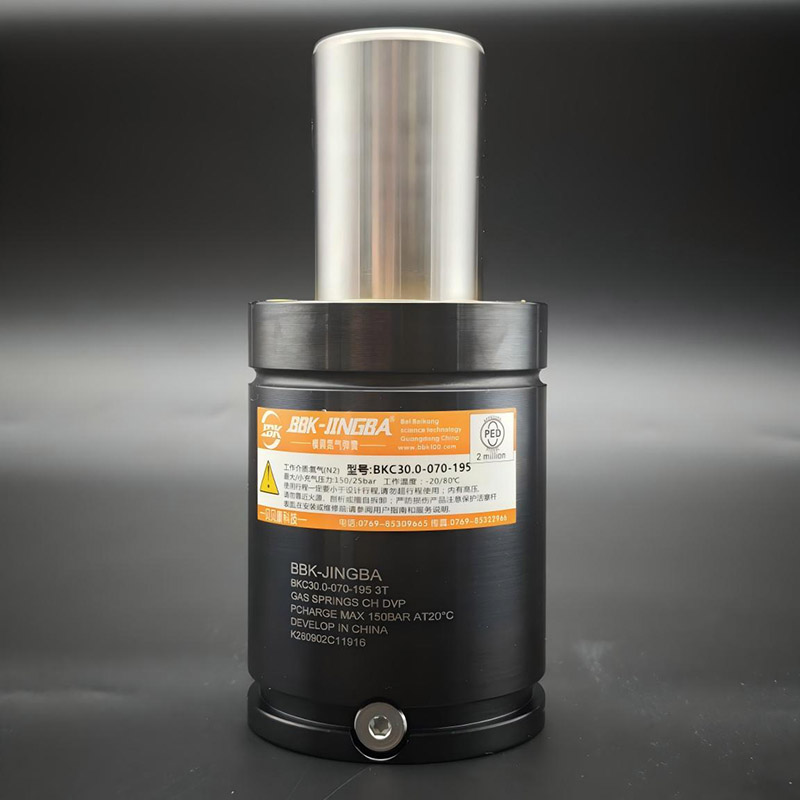
Fault phenomenon: Incomplete stamping process, product wrinkling, excessive springback, unstable die clamping force, and a sharp increase in defect rate in mass production using the same mold.
✅️A slight leakage of nitrogen occurred, and the pressure gradually decreased. Failure to promptly restore the pressure.
✅️The selected tonnage is too small, and it is constantly under excessive pressure over a long period of time.
✅️The actual working schedule is fully booked with no reserved buffer time, and the sealing system is continuously overloaded.
Quick solution method
1. Professional equipment measures the air pressure and replenishes nitrogen at the standard pressure. Overpressure filling is strictly prohibited.
2. Properly manage the schedule. The actual working schedule should not exceed 80% of the rated schedule. Avoid overloading the schedule to the extreme.
3. In the heavy-load operating condition scenario, directly upgrade to matching tonnage springs to avoid long-term overloading that would deplete the lifespan.
Fault phenomenon:The outer surface of the spring is smeared with oil and dust adhered to it. The pressure drops rapidly. It becomes less and less powerful as it is used more and more. Even frequent nitrogen replenishment is not enough to make it durable.
✅️High-frequency stamping causes the seals to wear, age and develop micro-cracks.
✅️The piston rod is scratched and corroded, damaging the sealing contact surface.
✅️High-temperature conditions accelerate the carbonization of lubricating grease and cause the sealing dry friction to fail.
1. Minor oil leakage: Clean the surface, check the pressure. It can be used for short-term emergency purposes. Regular rechecks are necessary.
2.Clearly leaking and pressure dropping sharply: Replace the high-quality sealing components directly or replace the finished products to avoid damaging the molds due to faulty production.
3. Select high-quality nitrogen springs that are suitable for high-temperature working conditions to enhance the sealing's temperature resistance and wear resistance.
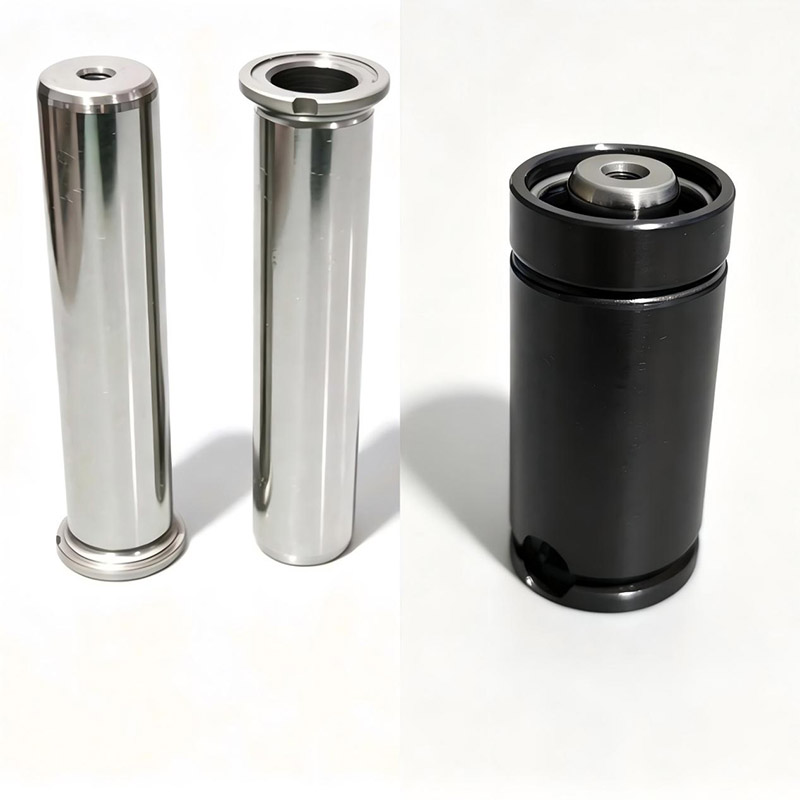
Fault phenomenon:The piston rod is rough, the coating has peeled off, and there are obvious scratches. Subsequently, there is continuous air leakage and unstable pressure. The fault keeps recurring.
✅️Without dust protection, iron filings, dust, and mold release agents can corrode the grinding rod body.
✅️Installation not perpendicular, subjected to lateral unbalanced loads for a long time, and experiencing unilateral friction and wear.
✅️During assembly, hard objects were used to pry or strike, causing damage to the rod body due to human error.
1. Install dust-proof covers; promptly clean the oil and iron filings on the pole body after production.
2. Adopt vertical assembly and universal base correction to completely avoid eccentric force application.
Fault phenomenon:The spring expansion and contraction mechanism is stuck, and the rebound is not smooth. There are abnormal noises during the stamping process. The mold opening and closing is shaky, and the product formation is unstable.
✅️The internal lubricating grease has deteriorated and is missing, resulting in dry friction.
✅️Installation hole position deviation, guide misalignment
✅️Internal entry of impurities and dust, causing the piston structure to become stuck.
1. Remove the internal components for cleaning and remove impurities; replenish with special high-temperature resistant lubricating grease.
2. Correct the installation verticality and hole position accuracy, and eliminate misalignment friction.
3. The jamming is severe and the abnormal noise persists. Replace the finished product directly to avoid damaging the mold guide post.
Fault phenomenon:The machine started up normally. After continuous operation for 1-2 hours, the pressure dropped sharply and the elasticity became insufficient. The machine was then shut down for cooling, and after a short period of time, it recovered slightly.
If the mold temperature exceeds 80℃, the sealing components will age and deform prematurely, leading to failure. Additionally, the nitrogen gas will expand and release pressure, which is a common problem in molds during summer.
1. Control the working temperature of the mold, ensure proper heat dissipation and cooling, and avoid continuous operation under high temperatures for a long time.
2. Specialized selection for high-temperature conditions, using high-quality nitrogen springs with temperature-resistant sealing structure;
3. Prevent overpressure and overstroke usage, and reduce the structural load under high temperatures.
Fault phenomenon:Multiple springs combined with molds, with one side pressing tightly and the other side loose. The mold is unevenly worn, resulting in burrs on one side of the product and size deviations.
✅️Different brands and batches of springs are mixed together, resulting in inconsistent elastic curves.
✅️The pressure deviation of a single branch is large and has not been uniformly calibrated.
✅️The installation heights are not uniform, and the forces are not balanced.
1. A set of molds all have the same model and are from the same batch of nitrogen gas springs, ensuring no mixed use.
2. Before assembly, conduct a unified pressure test to ensure consistent elasticity.
3. Calibrate the installation height and levelness to ensure uniform force distribution throughout.
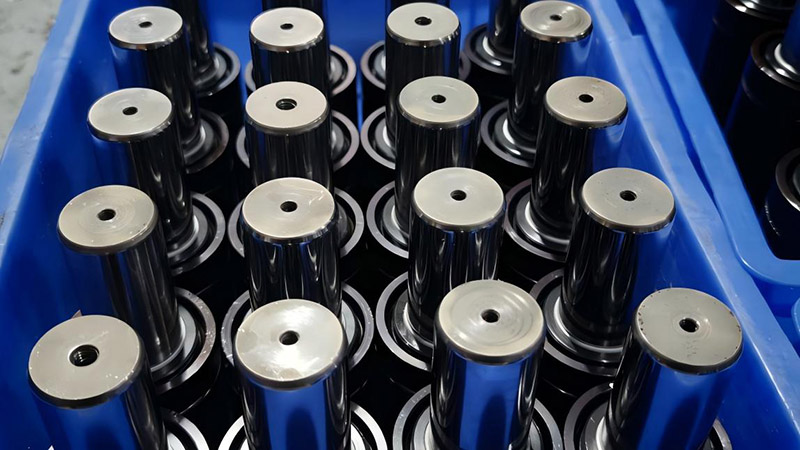
Most low-priced springs tend to have more faults and shorter lifespans. The core problem lies in poor sealing, rough manufacturing process, and weak temperature and wear resistance. Beibei Kang has made targeted optimizations to address the frequent pain points of the factory:
✅ Multilayer composite sealing structure:Resistant to leakage, high pressure and high temperature, significantly reducing air and oil leakage faults, suitable for high-frequency stamping conditions
✅ High-hardness precision-ground piston rod:The surface is smooth and durable, resistant to scratches and corrosion. It also eliminates repeated air leakage caused by damage to the rod body.
✅ Stable elastic output:The elastic curve is uniform, and multiple branches are connected in parallel with strong synchronization, which avoids mold wear unevenly and ensures good product quality.
✅ Adaptation to harsh working conditions:Anti-fatigue, anti-shock, suitable for heavy-load scenarios such as mold stamping and robot balancing cylinders
✅ Abundant in stock + Customizable:Standard model is available immediately. Non-standard sizes and tonnage can be customized. It can perfectly replace imported parts, reducing costs without compromising quality.
A:It is not recommended to work while ill for an extended period! Even a minor leak can rapidly worsen, causing the pressure to continuously decrease, leading to batch product defects and even damaging the molds, resulting in a loss that outweighs the gains.
A:It is strictly prohibited to disassemble without authorization! The internal space contains high-pressure nitrogen gas. Unauthorized disassembly poses safety risks. Pressure replenishment and maintenance require professional equipment and personnel to operate.
A:80% of issues—such as undersized selection, lateral loading, over-travel, and exposure to high temperatures—stem from operating conditions rather than quality defects; proper usage can significantly extend service life.
A:Beibei Kangke offers nitrogen gas springs designed for direct, 1:1 replacement of imported models. They feature specifications, dimensions, and precision that perfectly match the originals, with sealing and wear-resistance technologies benchmarked against imported products. Available at lower prices and with faster delivery times, they are compatible with the vast majority of mold and automation applications.
When it comes to nitrogen gas spring failures, 30% depends on quality and 70% on usage.
Selecting high-quality products, avoiding pitfalls in model selection and installation, and performing proper routine maintenance can significantly reduce downtime caused by failures, lower mold maintenance costs, and improve production yields.
There is no need for blind, frequent part replacements! Reliable quality combined with correct usage is the true path to cost savings for factories.
Whether you need help with model selection and replacement, troubleshooting, or custom solutions, feel free to consult Beibeikang—we are here to safeguard your production line!
Prepared by: Dongguan Beibeikang Precision Machinery Technology Co., Ltd.
For further technical discussion, please contact Engineer Liu at 13620045661 or 13802381201.
BeiBeiKang Develop Co.,Ltd


