Добро пожаловать в BeiBeiKang Разработка Co.,Ltd
Introduction
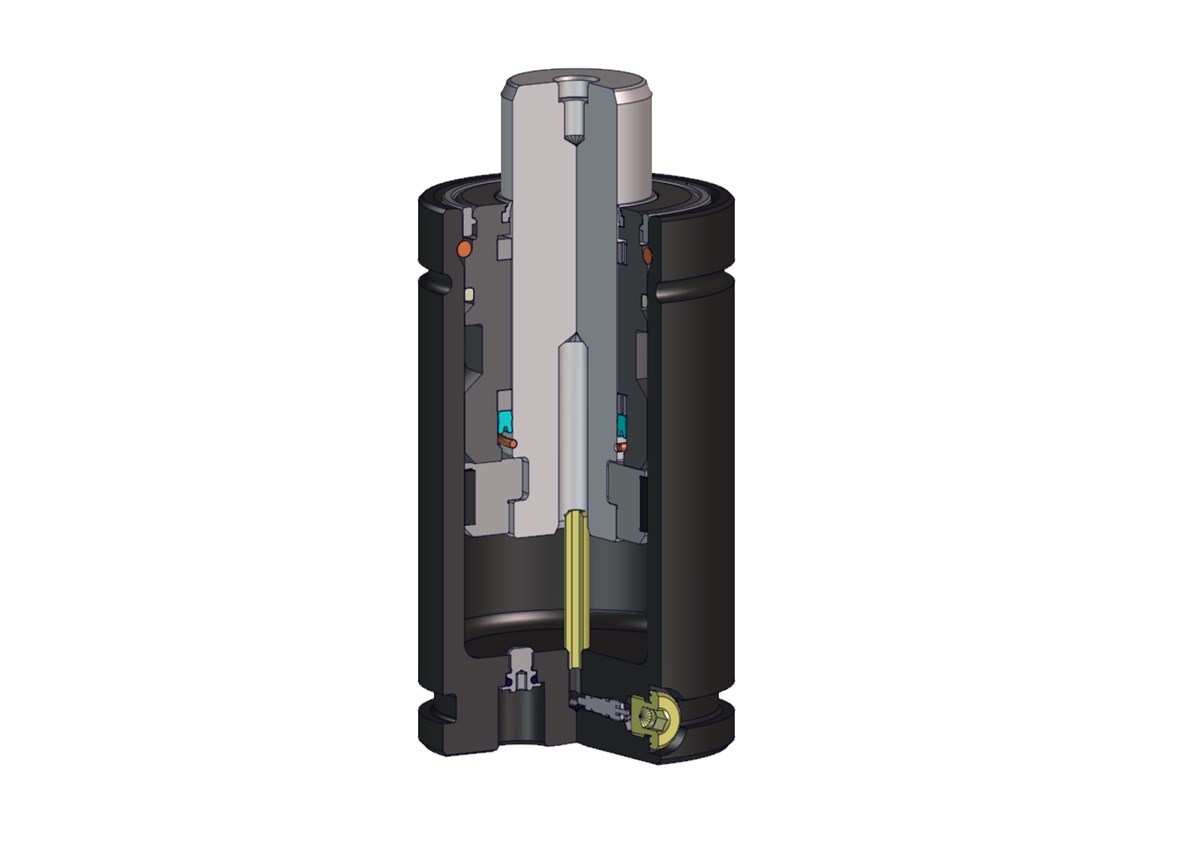


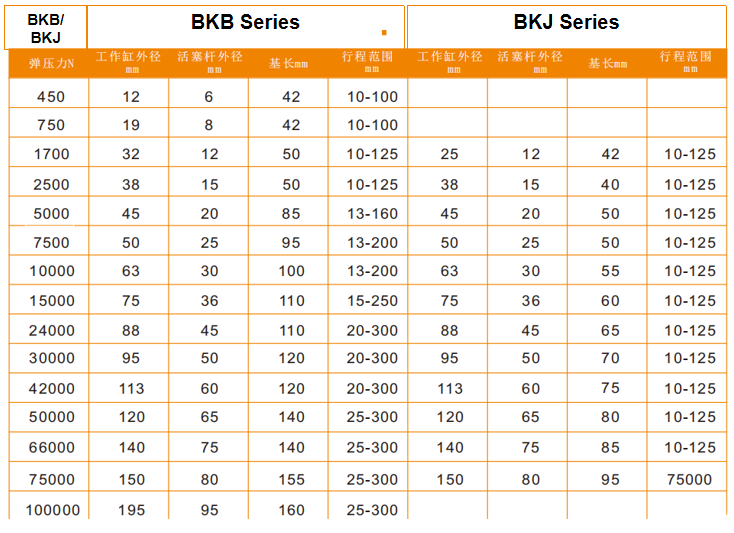
Applications of nitrogen springs
Generally, air springs are used in many applications that require compression springs, such as:
Metalworking and Metal Forming
injection molding
commercial manufacture
Automotive and aerospace manufacturing
Assembly Operation
Another major application of nitrogen springs is metal stamping. Specialized nitrogen-molded spring assemblies are located within the mold set between the dies; they enable the dies to open and close with the force required by the stamping press and to achieve stroke lengths exceeding those required for the specific application.
Nitrogen springs are an excellent choice for metal stamping applications, as they provide consistent, instantaneous, and controllable pressure throughout the entire stroke. They help maintain the appropriate die clearance and prevent the stamped material from deforming or sustaining damage.
Advantages of nitrogen springs
Nitrogen-coated mold springs offer numerous advantages. Generally, as compression springs, they provide:
1. Long service life and exceptional durability
The product's piston rod is precision-machined to offer excellent wear resistance, with a surface hardness of HV1000 or higher and an HRC value of 40 or above; its dimensional accuracy is below Ra 0.02 μm. Combined with high-quality piston rods and world-class TSS sealing components, this high-performance sealing system ensures the long-term service life of the nitrogen spring. The product has undergone testing by the National Automotive Quality Supervision Center and meets all quality standards; after completing the effective stroke, the pressure reduction rate remains below 5%, fully complying with international standards.
II. Can reduce costs
This nitrogen spring features a compact size, high elastic force, long service life, and constant spring pressure. Its compact size saves mold space, its high elastic force reduces the number of required springs, and its long service life decreases the frequency of mold maintenance, thereby lowering the overall mold cost.
III. Absolute Safety
During the design phase of this product, safety has been given top priority, with the incorporation of an emergency safety relief groove for use under non-standard conditions; furthermore, compared with the pipe-welding fabrication process employed in other products, our company utilizes a monolithic cutting-forming method combined with a fully automated, proprietary welding process to ensure the product's safety and reliability.
For more information, please click here.
Advantages over helical springs
Under identical working stroke conditions, the overall height is significantly reduced.
A short nitrogen spring BKJ5.0-080-210 (diameter: 45 mm; stroke: 80 mm; total height: 210 mm; final force: 636 kgf) is equivalent to a medium-load helical spring with a diameter of 63 mm, a working stroke of 80 mm, a total height of 305 mm, and a final elastic force of 518 kgf.
merit :
1. With identical working stroke and spring force, the height is significantly reduced.
2. Makes the mold structure more compact and reduces costs
Features a larger initial load capacity
When a nitrogen spring comes into contact with the mold, it can provide a substantial known initial force, ranging from 45 daN (BKB0.45, cylinder bore of 12 mm) to 18,300 daN (BKB180.0, cylinder bore of 150 mm), whereas a helical spring requires a pre-compression load to achieve this initial force.
merit :
1. Nitrogen springs do not require a preloading force.
2. The installation of nitrogen springs is simpler and faster, thereby reducing costs.
Balances and controls elasticity
When nitrogen springs are connected via hoses to form a piping system, the internal gas pressure in each nitrogen spring remains identical.
This enables the entire system to reach equilibrium. Such equilibrium cannot be achieved using helical springs, as the force provided by each spring cannot be exactly identical.
merit :
1. Each contact point exerts an equal force – balanced mold
2. The spring force of the nitrogen spring can be set according to specific requirements—facilitating production.
3. Enables real-time monitoring of internal system gas pressure – ensuring the production of high-quality parts
4. No mold modification is required; this will not lead to production halts, extend the service life of the punch and other components, and reduce overall costs.
Adjustable pressure
The initial force of the nitrogen spring can be adjusted by modifying the internal gas pressure; for pipeline connections, pressure adjustment can be achieved using a control valve (with a maximum pressure rating of 150 bar), whereas the force of the helical spring is not adjustable.
BeiBeiKang Разработка Co.,Ltd


Авторск прав © 2026 BeiBeiKang Разработка Co.,Ltd
