Welcome to BeiBeiKang Develop Co.,Ltd
I. Common Industry Questions + Core Answers
1. How to choose the right gas spring model?
3 Core Steps: ① Calculate the force (actual demand + 15%-20% safety margin); ② Select the stroke (working stroke + 5-10mm reserve, do not press to the limit stroke); ③ Match the pressure ratio (1.2-1.4 for simple processes, 1.5-2.0 for deep forming), and select according to the installation space and working conditions.
2. Working Principle of Nitrogen Spring
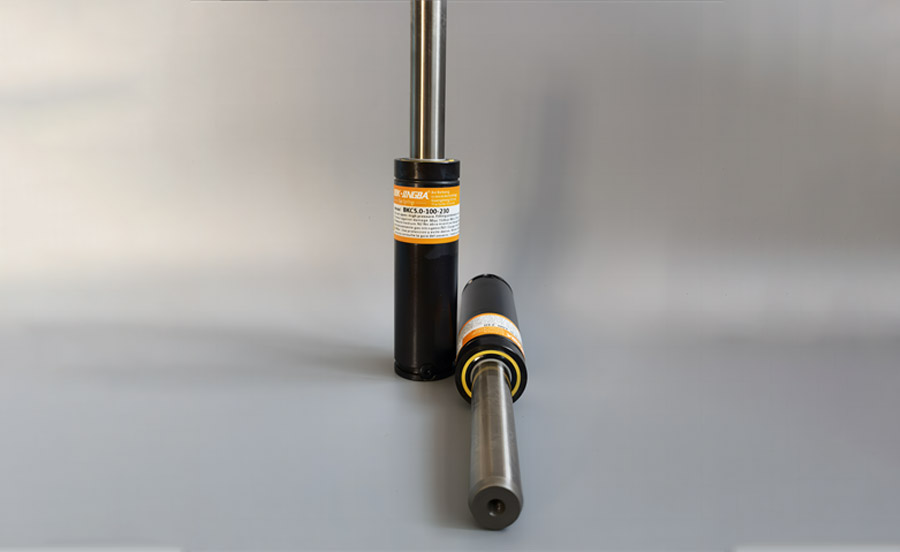
Using high-purity and high-pressure nitrogen as the energy storage medium, it stores energy by compression during mold clamping and rebounds by expansion during mold opening. It has a compact structure and strong elasticity, replacing traditional springs and simplifying the mold structure.
3. Explanation of Force-Stroke Curve
Initial force (F₁) is the basic elastic force when fully extended, and terminal force (F₂) is the maximum elastic force at the rated stroke, with pressure ratio K=F₂/F₁; the longer the stroke, the steadily increasing elastic force, which is suitable for various stamping processes.
4. Installation Options
Four standard models, covering all scenarios: ① Bottom installation (universal and mainstream, simple and convenient); ② Flange installation (stable under heavy load, impact-resistant); ③ Groove embedded installation (space-saving, quick assembly and disassembly); ④ Floating joint installation (compensates for angle deviation, prevents eccentric load).
5. Service Life
Under normal working conditions, the service life can reach more than 1 million times; standardized installation and regular maintenance can extend the service life by 30%, and special models can be selected for high-temperature/high-frequency working conditions.
6. Safety
Built-in anti-leakage seal and overpressure protection structure; it is forbidden to use beyond temperature range (-20℃~60℃ for regular models), over stroke or eccentric load; check air tightness regularly to eliminate potential safety hazards.
7. Raw Materials
The cylinder body is made of high-strength alloy steel, and the seals are made of special high-pressure/high-temperature resistant rubber rings (regular nitrile rubber, fluorine rubber for high-temperature models). The materials meet the standards, with load-bearing, wear-resistant and corrosion-resistant properties.
8. After-Sales Service
Provide free model selection guidance and installation consultation; repair/replacement is available for non-man-made damage within the warranty period, and lifelong maintenance services such as nitrogen supplement and seal replacement are supported.
9. How about pressure regulation and gas filling?
Equipped with a special gas filling valve, gas filling is convenient, and pressure can be accurately adjusted according to process requirements; the regular working pressure is 150-200bar, and the pressure is stable without fluctuation after adjustment, no frequent pressure supplement is needed.
10. Cost-Effectiveness Compared with Imports
The size and performance are fully comparable to imported brands such as KALLER and DADCO, and can be directly interchanged; the price is only 1/3-1/2 of that of imports, with up-to-standard quality and similar service life, and the cost-effectiveness is far higher than that of imports.
II. Core Advantages
Small size, large load, long service life and fatigue resistance; controllable output force, flexible installation, suitable for various molds; benchmarking against import standards, high cost-effectiveness and convenient after-sales service.
BeiBeiKang Develop Co.,Ltd


